April 2, 2026
The hidden life of urban water: a conversation about how cities drink, breathe and live with water
Cities are built to get rid of water fast. Rarely questioned, this dictates how water moves through cities, how heat is managed, and how flooding happens. It also tells you what cities actually prioritise.
Speaking at the Alliance Française de Delhi as part of Paani Ki Kahaani (The Story of Water), a programme on water heritage and climate resilience for World Water Day, the session was part of an ongoing cycle of urban design workshops developed by Les Ateliers de Cergy, with the support of AFD - Agence Française de Développement, across Hyderabad, the Seine basin, and now Delhi, exploring the relationship between territories, people, and the water cycle.
These contexts are connected by what lies beneath the water you can see: the watershed that feeds the river, the foreshore around the lake, the rivulets and channels that make water a living system. Sever those and the system stops functioning as a whole.
The discussion in Delhi opened that up to a general public, people who live in the city and experience it every day, rather than the planners and researchers this conversation usually stays within. An open dialogue with civil society, something urban practice still rarely makes space for. People were curious, engaged, and often surprised by what they'd never been invited to look at before.
We started with one question: what happens when it rains?
Follow the water and you see how everything is shaped to move it away. It gets pushed to the edges, caught in drains, sent into pipes, and taken out of sight. The whole system is built for speed. At that speed, water stops doing most of what it could: infiltrate the soil, recharge groundwater, cool the city, or support the plants and organisms that clean it. When the system fails, which it does regularly, the same logic produces flooding.
Why are cities designed this way? In most cases, land has been allocated to movement, construction, and economic use, all of which rely on sealed, impermeable surfaces. Once the ground is covered, water has no choice but to run off it, and to do so quickly.
Part of the answer lies in how cities learned to think about movement. Traffic engineering borrowed its logic from hydraulics: flow, capacity, friction. Streets were designed as pipes. But traffic is not water. Water always flows downhill. Drivers make decisions, brake, hesitate, choose. We designed cities around a metaphor, and in doing so, gave an enormous amount of space to something that doesn't actually flow, while taking it away from something that does.
How cities manage water is also how they manage climate. Seal the ground and push water away, and you get heat, drought, and flood. Let water soak, slow down, and support trees, and you get cooling, resilience, and life. Climate action is right outside your door.
Where cities have reclaimed space from cars and parking for people and nature, water has followed: slower, more present, allowed back into the soil and the city.
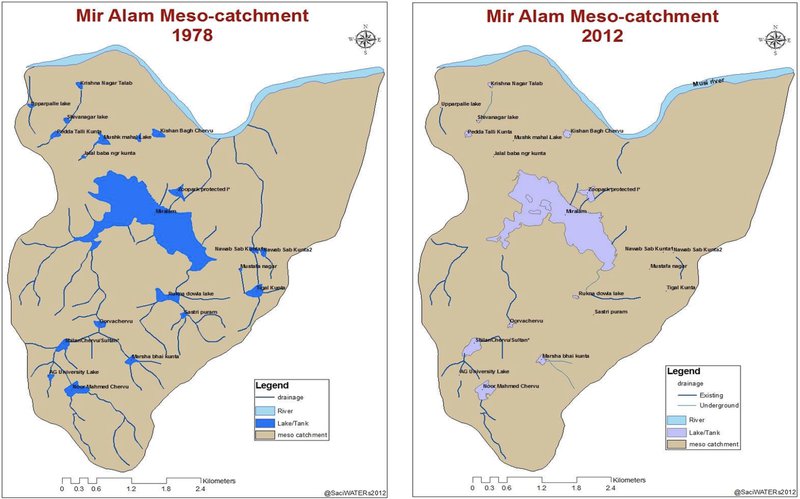
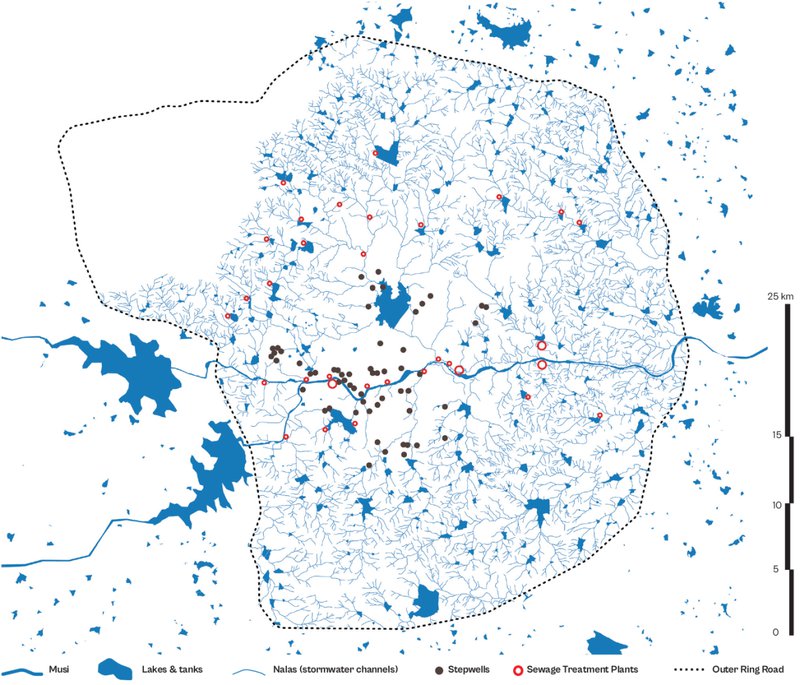
Hyderabad shows what this looked like before that logic took hold. The city once depended on a connected system of lakes, tanks, stepwells, and channels. Rainwater moved gradually across that network, storing water, recharging groundwater, supporting vegetation, and maintaining a more stable local climate. Since the real estate boom of the 1990s and the IT expansion that followed, that system has been dismantled. Hundreds of lakes have been built over or drained, their beds converted into roads and buildings. Those that remain are largely cut off from each other, choked with sewage and pollutants, their edges hardened and their catchments built over.
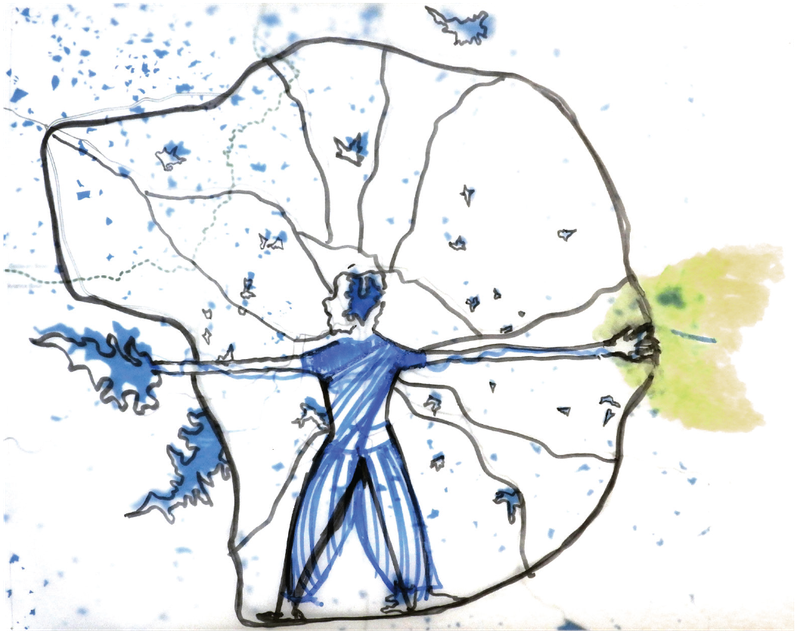
In 2024, as co-pilot of the Les Ateliers de Cergy workshop in Hyderabad, alongside Florence Bougnoux, I was part of a multidisciplinary team invited by the Telangana government to contribute to the Musi Riverfront Development project. A river corridor, though, started to feel increasingly limited as we spent time on site, observing the landscape and tracing the flows that sustain the river. It became clear that the river could not be separated from the systems that sustain it: the lakes and channels that feed it, the groundwater beneath it, the communities along it, the entire watershed and urban fabric it moves through. The scope of the workshop expanded accordingly, from riverfront development to river ecosystem restoration.
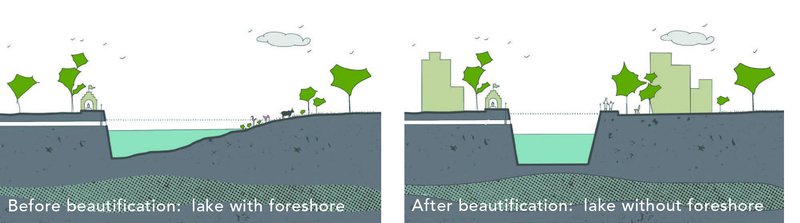
The same logic applies beyond the river itself. A lake is not only the water it holds. When its edges are hardened, its functions shrink. It can hold water, but it no longer absorbs, filters, supports life, or feeds the land around it. The foreshore, the fluctuating edge where land and water meet, is where much of that life happens. Fix it in place, and you lose it.
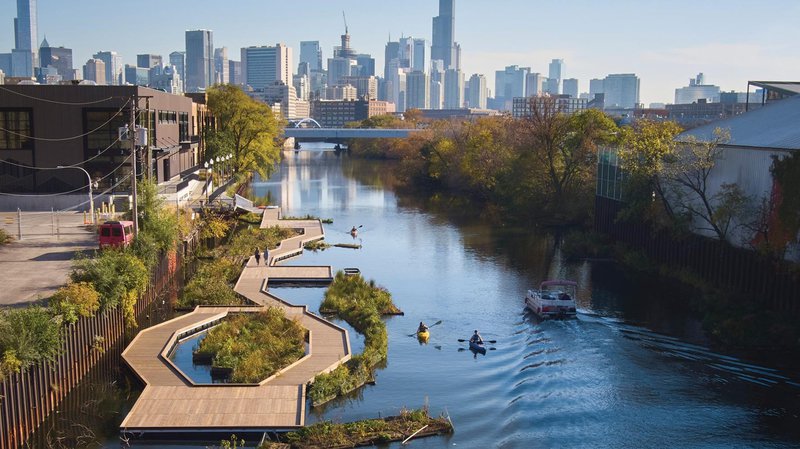
Some cities are beginning to bring those functions back. In Chicago, the Wild Mile project on the North Branch Canal has rewilded a stretch of industrial river using floating wetlands planted with native species, creating habitat for fish, birds, insects, and pollinators where there was once only a steel-walled channel. The sponge city model, developed in China, follows the same principle: let water be absorbed, stored, and released slowly. Both require the same thing: giving water room to breathe. Water needs time and space. Most cities have taken both away.
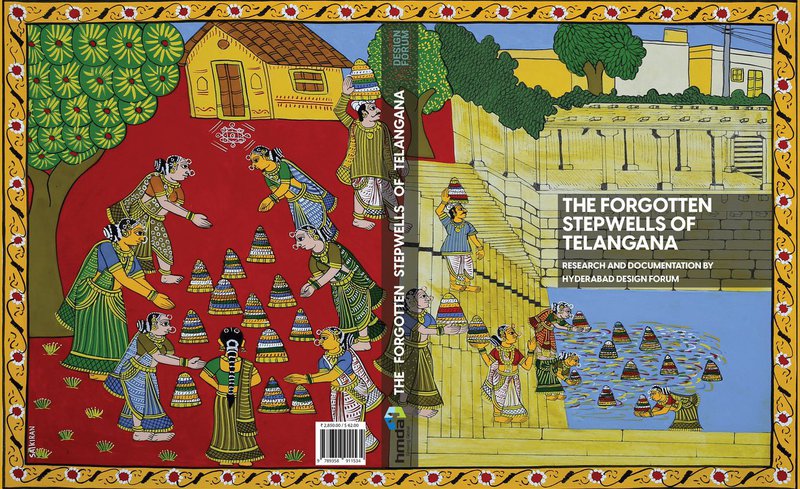
Around wells, stepwells, tanks and lakes, water was part of everyday life and the social fabric around it. These were often spaces where women were present and where everyday exchange took place. When water systems disappear, something else goes with them. Cities organised around movement remove the places where relationships form: the well, the tank, the shared edge of a lake, the unplanned everyday encounters that hold communities together. When small water bodies disappear, the communities that managed them disappear with them, and with them the knowledge, care, and daily attention that kept those systems alive.
Change is slow partly because the system is built for the wrong scale. Large contractors, standardised infrastructure, concrete and pipes: this is what urban water management has been designed around. It is not set up for soil, vegetation, local observation, or shared care. That requires a different kind of institution.
One proposal from the Hyderabad workshop gives this a concrete form: the House of Common Waters. Conceived as a community hub anchored around a lake, it brings together residents, researchers, and institutions to engage directly with water, through participatory governance, knowledge-sharing, and on-the-ground experimentation. The underlying logic is that water governance works when it is rooted at the scale where people actually live, and when the people who depend on a water body are also the ones responsible for it.
This is what the workshop called regenerative metropolitanisation: rebuilding the relationships between water, land, communities and governance that make a city genuinely resilient.
The conversation in Delhi was a small version of exactly that. A room full of people who had never been invited to think about their city's water, doing precisely that, together.
That is the thread running through this cycle of work within Les Ateliers: across Hyderabad, the Seine basin and its tributaries, and now Delhi. Different territories, different histories, the same invisible life of water waiting to be rediscovered.
Author : Reena Mahajan
Urban planner and architect advocating for people-centred, nature-positive cities
Founder of Studio DiverCity and creator of See Your Street Differently, a video series that makes complex urban ideas accessible to everyday audiences.
Co-pilot of the international urban workshop Water and Metropolitanisation in Hyderabad with Les Ateliers in 2024
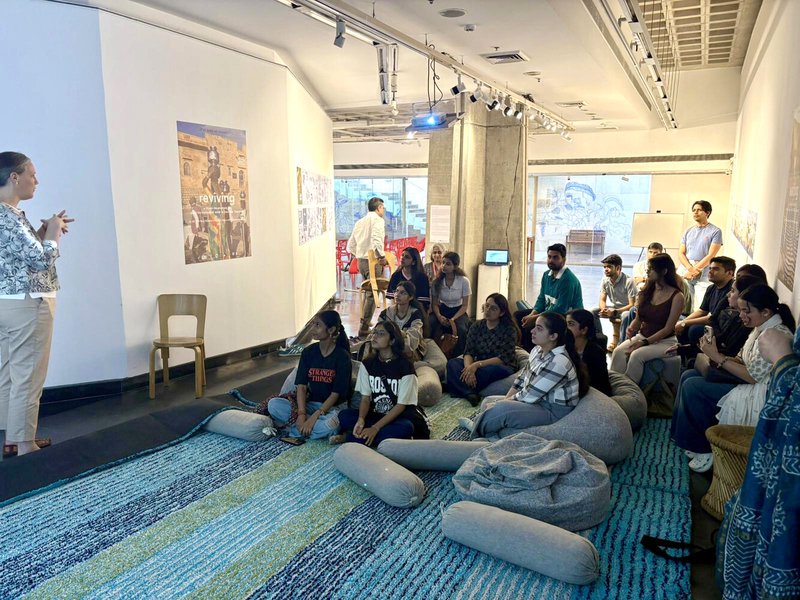
An open dialogue with civil society at the Alliance Française de Delhi | World Water Day
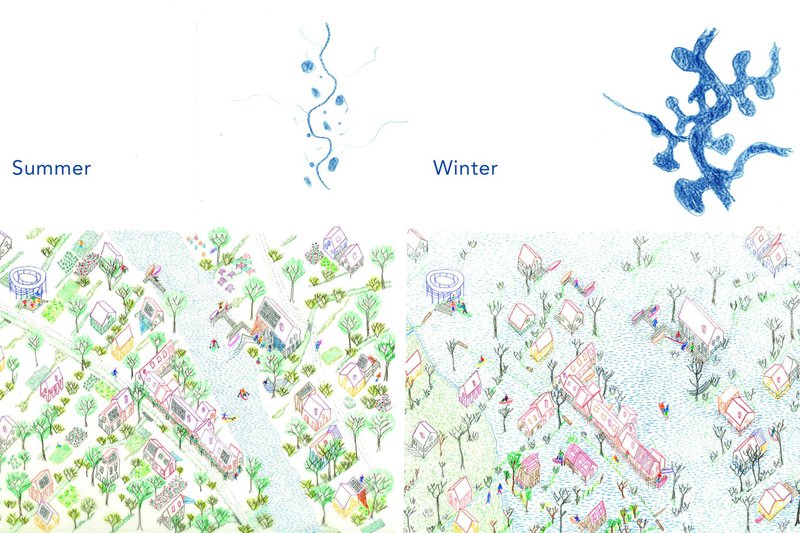
Understanding what water needs | The River Seine as a Great Garden — Les Ateliers de Cergy
Shrinking drainage catchments of Hyderabad | Water and Metropolitanisation — Les Ateliers de Cergy
Musi River Ecosystem, Hyderabad | Water and Metropolitanisation Workshop — Les Ateliers de Cergy
Hardened edge, loss of function | Water and Metropolitanisation Workshop — Les Ateliers de Cergy
The Wild Mile, Chicago | Image credits — Dave Burk, SOM
Where water, care, and daily life meet | The Forgotten Stepwells of Telangana
Tracing water from source to flow | Water and Metropolitanisation Workshop — Les Ateliers de Cergy