May 2, 2025
Hyderabad 2024 : Water and Metropolitanisation
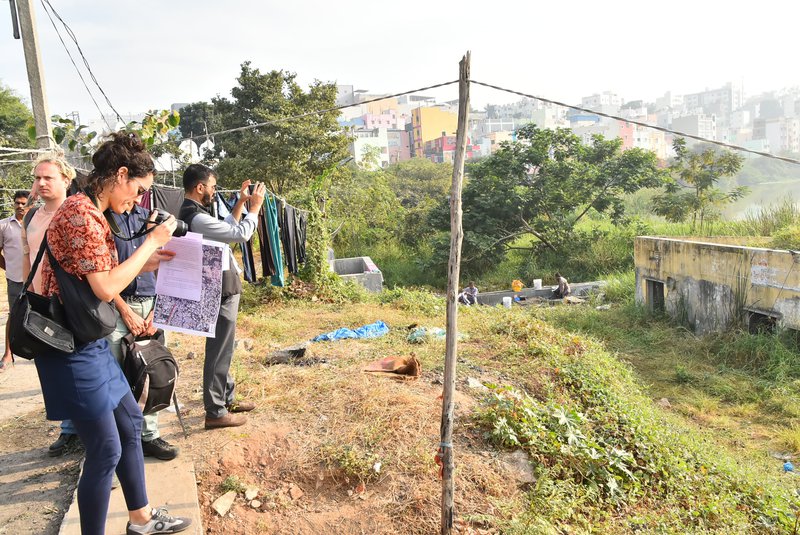
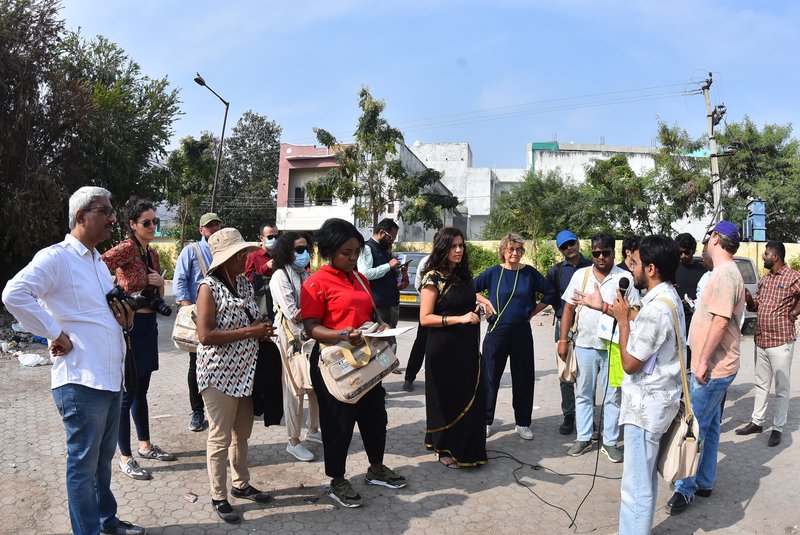
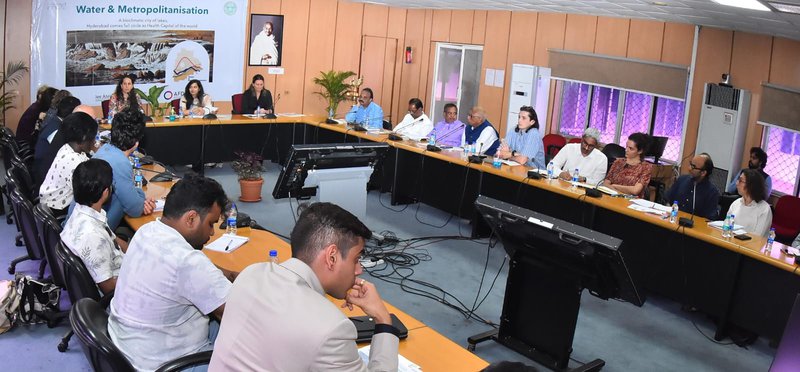
In this context, from 25 November to 6 December 2024, the international urban planning workshop organized by Les Ateliers took place at the request of the Municipal Administration and Urban Development Department (MA&UD) of the Government of Telangana, with the support of the French Development Agency and the Embassy of France in India.
Hyderabad: A Bioclimatic City Seeking Renewal
Historically shaped according to bioclimatic principles, Hyderabad long managed its water through an ingenious network of lakes, reservoirs and baolis, creating a green and habitable microclimate at the heart of the arid Deccan plateau.
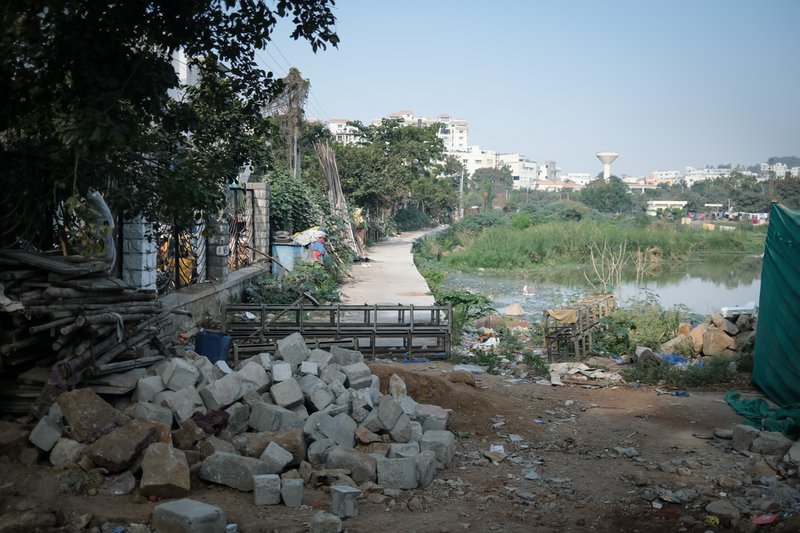
But rapid urbanization now threatens this heritage: land artificialization, pollution, the gradual disappearance of ecosystems, and urban sprawl extending far beyond administrative boundaries.
The 2024 workshop therefore had a clear objective: to give Hyderabad a resilient vision inspired by its water heritage, and to guide it toward a sustainable, innovative and health-centered urban model.
A Territory Analyzed at Multiple Scales
Starting from the Musi Riverfront Project, participants broadened their analysis to the entire Hyderabad Metropolitan Region.
The challenge: to imagine a future in which lakes, canals, watersheds and local communities once again become structuring elements of harmonious urban development.
Preserving water systems, restoring ecological continuity and ensuring water security emerged as essential levers to safeguard the health, quality of life and prosperity of the megacity.
Three Visions for a Resilient Hyderabad
At the end of the workshop, three teams put forward innovative proposals to reinvent the city’s relationship with water.
1. AQUAPOLIS: A City Turned Toward Its Aquatic Heritage
Aquapolis proposes repositioning Hyderabad as “the city of water,” reconnecting with its original identity while addressing contemporary climate challenges.
Key proposals:
-reintroduce biodiversity (fish, birds) as indicators of ecological health;
-combine nature-based solutions and low-tech infrastructure to manage waste and wastewater;
-develop Water Ripple, a citizen app providing real-time information on the status of water systems;
-transform Chaderghat into a model hub and rethink urban lakes.
2. THE WATER SPEAKS: Water as the Driver of an Ecological and Participatory City
This team proposes a paradigm shift: taking ecology as the primary guiding principle.
Priority measures:
-restore water bodies and ensure connectivity between them;
-create blue–green ecological corridors across the metropolis;
-promote active mobility (walking, cycling) and high-quality public spaces;
-strengthen inclusion by involving residents in water management.
3. GUARDIANS FOR 7 GENERATIONS OF MUSI: An Intergenerational Vision
Inspired by principles of regeneration and responsibility toward future generations, this proposal reimagines the Musi Valley as a balanced, educational and transparent system.
Major directions:
-establish a long-term strategy integrating water heritage;
-design a technical handbook to restore hydrological balance within each watershed;
-transform wastewater treatment plants into “learning parks” open to the public;
-adopt a simple water-quality classification — smell, swimmable, drinkable — for full transparency.
Hyderabad Toward a Sustainable and Healthy Future
The workshop helped outline an ambitious vision: making Hyderabad a “World Health Capital,” capable of accommodating 20 million inhabitants while preserving its essence, its water and its climate.
Driven by a collective, multidisciplinary and international approach, these proposals pave the way for a resilient metropolis rooted in ecosystem restoration, responsible water management and citizen participation.
Hyderabad, strong in its history and looking toward the future, now has all the tools to once again become an exemplary bioclimatic city, where water is not only a resource but a driver of innovation, health and prosperity.